

Feline Sonata: When Love Goes Wrong

Welcome to bestselling, award-winning author Sarah Fay’s personal Substack.
Everything was just right for Zosi’s arrival: litter box, cat beds (plural, cat houses (plural), string toys, balls, water fountain (not just a bowl), ergonomically designed food bowls. Choking hazards (tissues, paper clips, hairbands, etc.) were secreted away. Protectors covered all cords to prevent her from biting them and getting electrocuted.
She was coming from a breeder I found on Facebook rather than the nearby shelter. This made me enemy number one in many cat circles. But it seemed that getting a purebred cat decreased the likelihood that anything could possibly go wrong. Never mind that the breeder had been uncommunicative via email and seemed reluctant to speak on the phone; previous buyers praised her on Facebook. Plus—and this is big—the breeder was a vet.
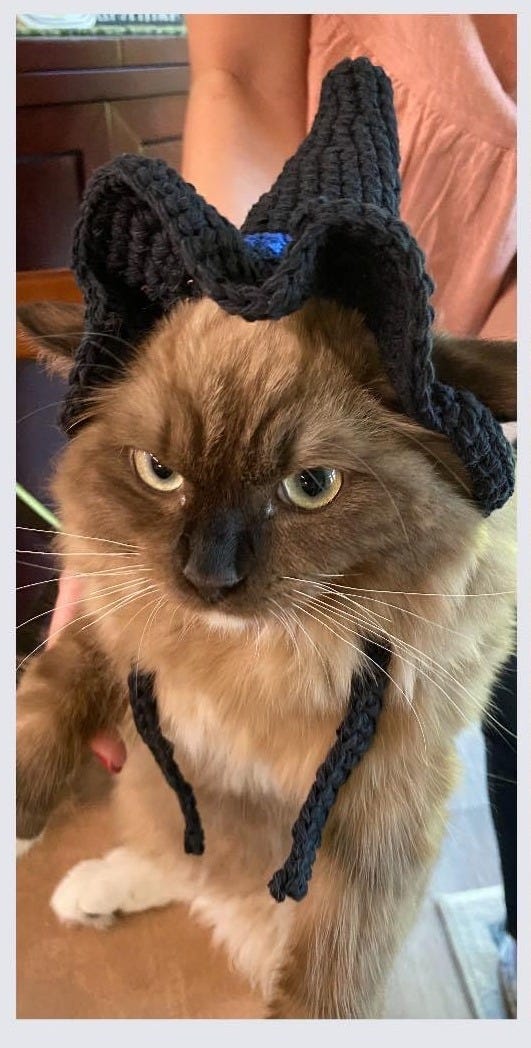
Zosi arrived impossibly small and shivering: a minx ragdoll with long beige fur, white patches on her paws, and a white patch on her chin. There was no way Zosi was eight weeks old like the breeder had said.
But cat ladies on Instagram nursed kittens that couldn’t even open their eyes yet. Others won over feral cats in fifteen-second reels. I could do this.
I spent every available moment with her. The bathroom—her safe space—was a kitten sanctuary. Kitten relaxation music—new-agey songs with titles like “Snooze the Day Away” and “Balls of Yarn” came from my iPad. A stuffed animal with a battery-operated beating heart lay on the tile floor. A diffuser plugged into the outlet released pheromones to remind her of her mother.
At night, I used a folded-up yoga mat as a bed. The bathroom was so small that I couldn’t stretch out my legs. My head was inches from the litter box. I was lulled to sleep by the calming songs coming from my iPad: “Furry Best Friend,” “Feline Sonata.”
I placed my laptop on the toilet seat and propped the pillows I’d brought in to make it comfortable against the bathtub. The doubled-up yoga mat served as my cushion. In that windowless room, it felt as if Zosi and I were the only two creatures on Earth.
She stayed behind the toilet in a blanket bed I made for her, coming out only when I was out of the room. One night, I woke to the sound of her purring. Her little paws climbed up my side, over my arm, until she was near the crook of my stomach. The bathroom was lit only by a nightlight, so all I could see was her outline. Her purrs grew louder. Soon, she was nestled against me. This was it. This was what I’d wanted.
*
Eventually, she started to roam the apartment, and I plied her with gourmet food and the best cat beds and toys.
I don’t remember the first time she bit me, or even the first attack. All I know was that when I tried to work at my desk, she attacked my arms, her sharp little kitten teeth drawing blood. And in bed, well, she attacked me then too, so badly I locked her out of the room.
I read everything I could online about curbing aggression in kittens. The vet said that kittens could develop “intense biting and scratching habits” when they weren’t properly socialized, were played with roughly by humans, or weren’t given appropriate toys when they were young. I tried everything my vet and the internet said to do. I rewarded her with treats when she didn’t bite. We played with wand toys for hours at a time. Pheromone diffusers occupied an electrical outlet in every room. Catnip didn’t affect her (most kittens don’t respond to it), but I tried. Instrumental kitty music played at all hours. (“Happy Purring” became one of my favs.) We engaged in “structured play” four times a day using a wand toy.
The only thing she went after with more viciousness than me was her stuffed fox toy. It was twice her length. She pounced on it, sinking her teeth into the fox’s neck. It hadn’t done anything to her to deserve it either.
*
“She’s just a cat,” my mother said on the phone.
“I know she’s just a cat.”
What was most confusing was how, at 5 PM every day, Zosi transformed into my dream cat. She’d come to me, her purring audible. I’d kneel and pick her up, holding her like a baby—not cradled in my arms but upright over my shoulder and against my chest as if to burp her. We’d stroll around the apartment. She was pure calm, glimpsing life from a different height. Then I’d sit on the couch. She’d snuggle against my neck. Her heart seemed to beat in time with mine, both of ours synchronized with the relaxing kitty music that was playing. (Either “Tender Snuggles” or “Playing with the Laser,” if I had to guess.) Soon, Zosi would be asleep on my chest. Usually, exhausted, I’d fall asleep too, my head lolling back.
I’d sit on the couch. She’d nuzzle against my neck. Her heart would seem to beat in time with mine, both synchronized to the kitty song playing—“Tender Snuggles” or “Playing with the Laser,” if I had to guess. Soon, Zosi would be asleep on my chest. Usually, exhausted, I’d fall asleep too, my head lolling back.
Every morning, I woke with the hope she’d change.
The cat behaviorist I consulted called it “mild play aggression” and then advised me to get another cat.”
I didn’t want to get another cat. I had a cat—Zosi—and it wasn’t going well.
*
“Well, you can’t keep living like that,” my mother said.
Getting rid of a pet now goes by the euphemism “rehoming.” I posted about possibly needing to rehome a ragdoll kitten on Facebook. Within minutes, people were DM’ing me wanting to know more about Zosi or saying they’d take her outright.
A woman named Rachel was persistent without being annoying. She and her partner Jeff lived in Milwaukee. They had two other cats—Thalia and Saki. A third died not too long ago; they were ready to add to their family.
Can we come to Chicago to meet Zosi? she wrote. Tonight? I gave them my number and address.
During our 5 PM cuddle, I told Zosi what I was going to do. Tears came in a rush. “I’m so sorry,” I said, but she was asleep.
By early evening, Rachel and Jeff were at my apartment building. I hadn’t disclosed the details of Zosi’s attacks. Once I did, I knew they wouldn’t want her.
I explained to Zosi that people were coming to visit. When I opened the apartment door, she went out in the hallway and sat in front of the elevator as if waiting for them to arrive.
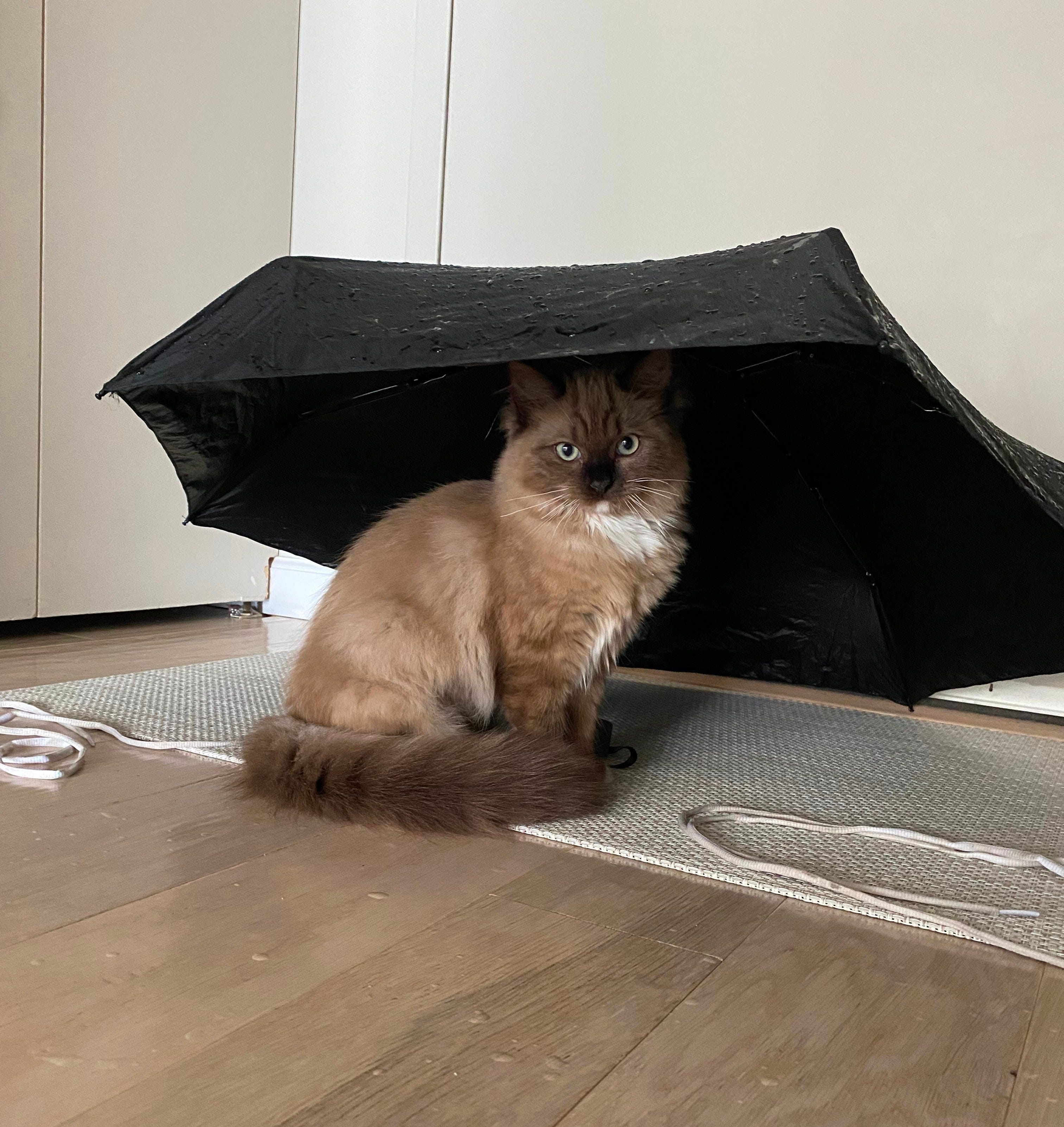
“You want to go with them?” I asked.
She turned, glanced at me, and went back to waiting for the elevator.
As Rachel and Jeff stepped off, Zosi dashed back into the apartment. Rachel had curly grey hair and an angelic face. Jeff wore glasses and was the quiet, laid-back type, the kind of man even the most hardened kittens and puppies probably flocked to.
Long story short, they did everything cat people are supposed to do. They sat on the floor to get on Zosi’s level.
Once Zosi came out, Jeff dazzled her with a wand toy, moving it in sweeping arcs. Rachel cooed in the sweetest voice.
After praising Zosi’s litterbox skills, I admitted to her aggression. “She attacks me at night.”
Rachel nodded and smiled. “I understand.”
Understood what?
“It’s okay,” Rachel cooed to Zosi, unfazed. “It’s okay, sweet thing.”
They wanted to take her that night. I moved in a rush, gathering Zosi’s food and toys, getting out the carrier, overexplaining Zosi’s diet and habits and when and how she likes to play.
Zosi let me pick her up. She allowed me to hold her. I kissed and cuddled her, explaining that she’d have such good parents and two cat sisters. “I’m sorry. I’m so sorry.” I didn’t want to let her go. When I brought her to the carrier, she practically hopped in.
When they were gone, I couldn’t get rid of the traces of her fast enough—first her litter box, then the cat houses and toys Rachel and Jeff didn’t take. All of it went in the dumpster downstairs.
*
The next day, a text came from Rachel: Zosi had snuggled on her lap on the car ride home.
The stillness and silence in my living room, around my desk, under the sofa, under the bed seemed to swallow me. The gate I’d used to (try) to keep her out, keep her contained, leaned against the wall.
A few nights later, Rachel wrote that Zosi was “a busy bee.” Busy bee?
The next few weeks were filled with videos from Rachel and Jeff documenting Zosi’s transition. One video was of her in their bathroom—a much larger bathroom than mine, with windows. In another, as Rachel cooed “Good girl” in the background, Zosi viciously attacked a wand toy.
Photos arrived: Zosi (serenely) curled up on the bathroom rug, Zosi (angelically) backlit in the sun on the windowsill, Zosi (adoringly) rubbing against Jeff’s legs.
More texts came: Zosi and their cat Thalia had played in the cat tunnel together, Jeff had a cold and Zosi sat on his lap—his lap.
*
What had I done wrong? Why hadn’t I had that kind of relationship with her? Had I been too cloying? Too distant? Not patient enough? Not understanding enough?
It was the kind of self-questioning that throws one into a spiral, making me think that if you can just get them back, it will be different and you’ll prove that it wasn’t your fault.
“You don’t want her back,” my mother said. “She attacked you. Regularly.”
Twice, I went online and looked at car reservations, planning how I’d get to Milwaukee. It would be simple: I’d just tell Rachel and Jeff that I made a mistake.
One early, early morning, unable to sleep, I sat on my balcony until the sun came up. Soon, the sky was blanketed grey. Mirroring it, the lake was a pewter hue.
I sobbed—sloppy sobs. Overwhelming and out of control.
Then I put on my running shoes and walked along the lake. I walked and walked, releasing Zosi to her new life.
Thank you for reading!
This is a reader-supported publication. You can support my work by becoming a paid subscriber—
—or by buying (or gifting) a copy of my national bestselling memoir, Pathological.

Oof, Sarah, I feel this one. There are so many variables in adopting a pet. The breeder vs. rescue choice shaming is one of the worst. You did everything right, and still felt as if you’d failed. I’m convinced that cats are born with certain traits that can’t be socialized away. Thank you for sharing your experience. I’m pondering the idea of inviting a new kitty into my home, or spending my days writing and sipping coffee at the cat cafe. Have to see where my grief over losing Mini leads me.
I loved this. We had a cat who despised me, yet adored my teenaged daughter. Nothing I did made the slightest bit of difference. Eventually the daughter and the cat left home, and I came to terms with it.